Method, materials & detailWindow cleaning sounds simple. Doing it consistently, in all weather, on the right cycle, with the right equipment, is what separates a reliable round from the bloke who turned up twice and ghosted you. Here's how the work is actually done.
Pure-water reach-and-pole, made on site
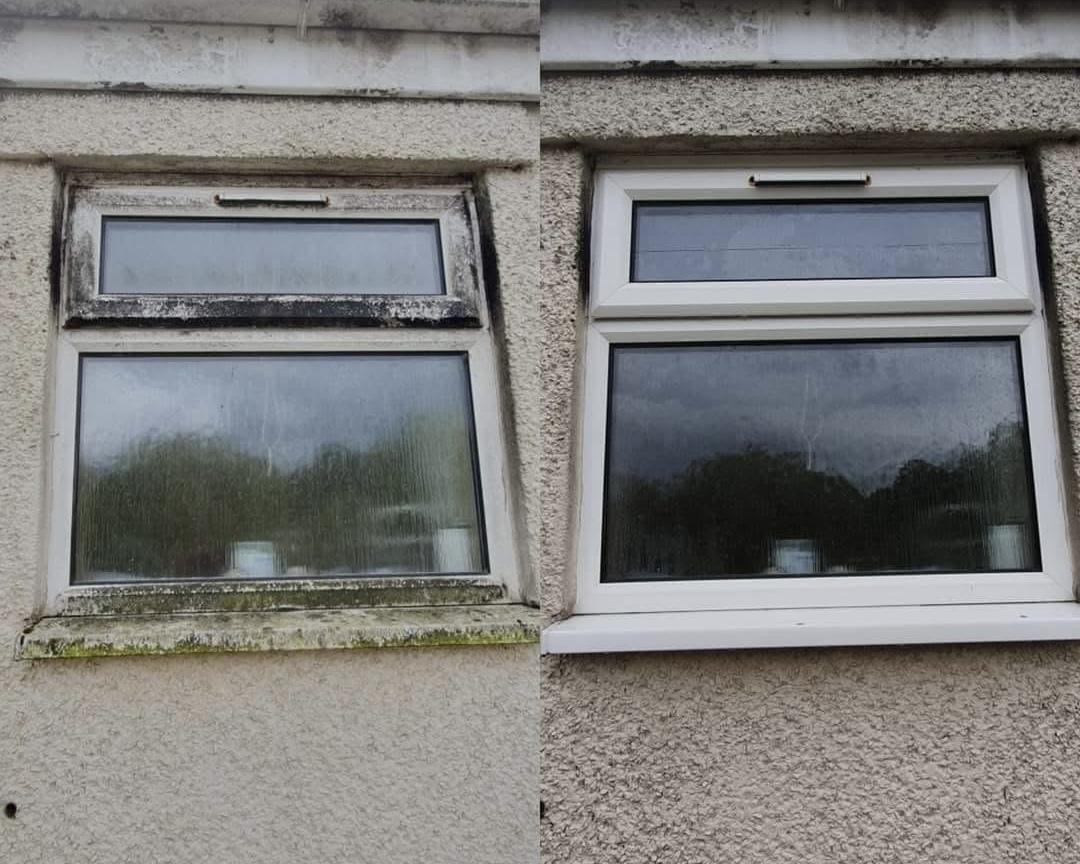
All exterior glass is cleaned with deionised water produced on a home-based purification system. Mains water is passed through a multi-stage filter to strip out the dissolved minerals (TDS reading at the pole tip is checked, not assumed). The water is then delivered through a carbon-fibre pole with a soft-bristle brush head — glass and frames are agitated, rinsed top-down, and left to sheet-dry. Because the water is at 0 ppm, there is nothing in it to dry as a spot.
Reach up to 5th-floor windows
The pole system reaches up to 5 storeys, which covers virtually every domestic property in Fareham, Gosport, Portchester, Whiteley, Cosham, Paulsgrove, Havant and Leigh Park — including Velux roof windows on dormers, gable-end glass, and conservatory side glass. No ladders are leant on your gutters, render, or fragile finials.
Traditional method for interiors
Interior glass is still cleaned the traditional way — applicator, squeegee, microfibre detail — because that's what works inside a home with curtains, blinds, sills and floors to protect. Internal cleans are a separate service and can be added to any round.
Residential rounds vs commercial
Residential rounds are built around domestic timings — usually 4-weekly or 8-weekly, with a friendly text the day before. Commercial work (pubs, offices, lettings, agents) is taken on with RAMS and method statements supplied on request. Same equipment, same standards, more paperwork.
Solar panels & specialist glass
The same pure-water system safely cleans solar PV panels and conservatory glazing without detergents, abrasives, or pressure — both of which can damage panel coatings and polycarbonate.